The BBC's Written Archives Centre at Caversham holds files and scripts dating from 1922 when the BBC was founded. Its focus is understandably on BBC produced programmes, and imported series like Star Trek get less attention.
I wanted to try and confirm some details about Star Trek's transmission by the BBC and they very kindly sent me relevant sections from the daily Programme as Broadcast (PasB) sheets. These sheets contain a wealth of information about the schedule; cast lists; start and end times of programmes, to the second; details of trails for upcoming programmes; even snippets of information about what wasn't shown (like the Grandstand outside broadcast from Aston Hill on 18/10/1969 "not transmitted due to the A.B.S strike").
I don't want to directly reproduce the PasBs which I have been sent to avoid infringing BBC copyright. There are plenty of examples online, including on the BBC site itself. Click here and you'll see the Pasb forms for Patrick Troughton's last Doctor Who story The War Games; frustratingly the PasB scan for episode 10 cuts off just before it gets to details for the Star Trek trail shown immediately afterwards.
Unlike BBC programmes the entries for Star Trek are restricted to a few lines. The entry for Wednesday 16 December 1970 reads
19.20.07 FILM: STAR TREK (3) PARADISE SYNDROME (16/4/0/1603)
SOURCE: Desilu
Footage: 4,541' 35mm
First Transmission
Not terribly useful right? Wrong. BBC Genome lists The Empath as being broadcast, because this is two weeks after the showing of Miri which generated complaints and resulted in the BBC pulling Miri, The Empath, Whom Gods Destroy, and Plato's Stepchildren from broadcast until 1993. BBC Genome results are generated from the Radio Times listings, which went to print in advance of broadcast and could not reflect last minute schedule changes. This change seems to have been so last minute that even the daily papers list The Empath rather than The Paradise Syndrome.
We can also see that this was the first transmission of The Paradise Syndrome, and that it was transmitted from 35mm film with a print length of 4,541 feet; using a film length calculator this gives a running time of 50 minutes 27 seconds. So, the BBC seems to have shown an unedited print.
The (3) seems to be an internal BBC episode number, indicating that this is the third episode shown from some arbitrary date. Three episodes prior to The Paradise Syndrome was Miri, but this is listed as (27). In other cases the number denotes the position in the BBC transmission order, so The Corbomite Maneuver is (15) and was the fifteenth episode shown in "series one". That system doesn't work here. Mirror, Mirror -shown three episodes before Miri- is numbered (24), but is the 25th episode shown in 1970. The long number in brackets (16/4/0/1603) is obviously a BBC internal code. It's also interesting that the source is listed as Desilu, several years after that studio was absorbed into Paramount.
I only requested PasBs for five episodes, because I didn't want to push my luck. So I picked five episodes which I hoped would clear up some of the more obvious scheduling mysteries.
The Corbomite Maneuver: Confirmed by Pasb as being first transmitted on 18/10/1969. The documentation says it was shown from a 16mm print, rather than the normal 35mm. Robert Justman and Herbert Solow, in Inside Star Trek, do mention that 16mm prints were made of episodes (one to go to Canada, and one for Burbank as a backup copy) but I don't know if syndication copies were often 16mm. The episode title is given as The Corbonite Maneuver.
The Doomsday Machine: First transmitted on 06/12/1969. BBC Genome, and the television listings for the Daily Mirror both list Court Martial. Again this must have been a very last minute change with Court Martial being held back to start BBC1's "series 2" on 06/04/1970.
Mirror, Mirror: First scheduled for broadcast on 15/06/1970. Mirror, Mirror was bumped for a repeat of England's terrible 1970 World Cup loss to West Germany. PasBs confirm the first transmission was on 11/11/1970.
The Alternative Factor: Definitely not transmitted until 08/12/1971. There's no obvious reason why the BBC sat on this first season episode for so long. It's transmitted a year after Miri which went out on 02/12/1970, before that the last season one story shown on BBC1 was The Enemy Within on 13/04/1970. The transmission of The Alternative Factor is so delayed that it comes after the first repeat of nine season one stories. It's easy to be glib but given this is generally regarded as one of the worst of season one could the BBC have delayed transmission for quality reasons? Interestingly the footage length is given as 4200 feet, well under the normal length of around 4500 feet for Star Trek episodes. 4200 feet works out at a running time of 46 minutes and 40 seconds, compared to the normal time of around 50 minutes. Was the BBC supplied with an edited syndication copy of The Alternative Factor, or did they do some editing of their own?
I also asked if there was any information about the complaints which the BBC received after showing Miri but I was told that this material is not in the scope for researcher access, and so cannot be located. I've been told by a friend with more experience of the WAC this is a very BBC reply and could mean one of about 73 different things. The important one being, the information is not available to me.
Showing posts with label The Daily Mirror. Show all posts
Showing posts with label The Daily Mirror. Show all posts
Sunday, January 31, 2016

Sunday, November 16, 2014
Star Trek On The BBC: 1972
Click here for part one: 1969
Click here for part two: 1970
Click here for part three: 1971
Three weeks into 1972 BBC1 began showing most of the stories skipped during the spring 1971 block of repeats. There's no obvious reason why these stories are suddenly acceptable for broadcast; just as it's still not clear why the episodes weren't repeated last year.
Click here for part two: 1970
Click here for part three: 1971
Three weeks into 1972 BBC1 began showing most of the stories skipped during the spring 1971 block of repeats. There's no obvious reason why these stories are suddenly acceptable for broadcast; just as it's still not clear why the episodes weren't repeated last year.
The
BBC had just completed a major survey into television violence. This survey
showed that American programmes made up only one third of the
schedule but contained two thirds of television violence; according to a Daily Mirror story on 27 January 1972 which named Star Trek, along with the BBC's own Doctor Who, and two other Desilu programmes The Untouchables and Mannix. What may be
significant is that this survey had run from November 1970 to May
1971. Miri was
broadcast in December 1970, not long after the survey began. It's
possible the complaints about Miri
came at exactly the wrong time for a BBC already concerned about
violence and other inappropriate material in imported programmes.
This could explain not only the withdrawing from broadcast of Miri,
The Empath, Whom Gods Destroy,
and Plato's Stepchildren but
also the delayed repeats of episodes which might otherwise have been
expected to air during February to April 1971 while the survey was
still being conducted. By the start of 1972, with the survey over and
the report written, the BBC might have been able to take a more
relaxed view about the content of Star Trek
and was able to reschedule episodes which seemed less suitable the
year before. The slightly later 7.25pm start time might also have
helped deflect any complaints. It's only 15 minutes after the start
time for the 1971 repeats but the difference between an 8pm finish,
and one after 8pm might be important for the BBC. A post 8pm finish,
presumably after the bedtime of young children, gives them a fig leaf
of protection if they are concerned about being accused of showing
programmes unsuitable for children too early in the evening
Regardless
of the reason it seems as if the block of unrepeated stories are
dropped into the schedule as soon as possible. I've already obsessed
over the BBC's eccentric Star Trek broadcast order but there's
something odd about the way all the previously skipped episodes are
tucked in between Errand Of Mercy and The Conscience Of The
King. It means all the episodes in the BBC's made-up "series
one" from 1969 are shown before the repeats of "series two"
episodes begin with Court Martial. As if the BBC programme
planners believed they couldn't repeat "series two" until
all of "series one" had been shown.
 |
| The Daily Mirror 27/01/1972 |
All the "series
one" episodes? Well not quite. In 1969 The Naked Time was the
second episode broadcast on BBC1. In 1972 it's held back a few weeks
to air after The Menagerie Part 2. Court Martial which launched
"series two" in 1970 is held way back and just scrapes in
as the penultimate 1972 episode. Dagger Of The Mind, and The Return
Of The Archons do not appear at all. In a 1984 letter the BBC
justified its decision not to show Miri, The Empath, Whom Gods
Destroy, and Plato's Stepchildren because they dealt, "most
unpleasantly with the already unpleasant subjects of madness,torture,
sadism and disease." Did the BBC still have some lingering
doubts about the acceptability of The Naked Time's space-drunkeness
and Finney's madness in Court Martial? It looks as if they did. The
no show of Dagger Of The Mind and The Return Of The Archons implies
that the BBC found those two episodes utterly unsuitable for
broadcast given their high levels of madness,torture, and sadism.
In the table below the
number in brackets shows how many times each story has been
broadcast.
1972-01-12 19.25 Errand Of Mercy (2)
1972-01-19 19.25 The City On The Edge Of Forever (2)
1972-01-26 19.25 The Menagerie Part 1 (2)
1972-02-02 19.25 The Menagerie Part 2 (2)
1972-02-09 19.25 The Naked Time (2)
1972-02-16 19.25 Charlie X (2)
1972-02-23 19.25 The Man Trap (2)
1972-03-01 19.25 Balance Of Terror (2)
1972-03-08 19.25 Arena (2)
1972-03-15 19.25 The Conscience Of The King (2)
1972-03-22 19.25 The Galileo Seven (2)
1972-03-29 19.25 The Enemy Within (2)
1972-04-05 19.25 Catspaw (2)
1972-04-12 19.25 Who Mourns for Adonais? (2)
1972-04-19 19.25 The Apple (2)
1972-04-26 19.25 Metamorphosis (2)
1972-05-03 19.25 Wolf In The Fold (2)
1972-05-10 19.25 The Changeling (2)
1972-05-17 19.25 The Trouble with Tribbles (2)
1972-05-24 19.25 Bread And Circuses (2)
1972-05-31 19.25 Journey To Babel (2)
1972-06-07 19.25 The Deadly Years (2)
1972-06-14 19.25 A Private Little War (2)
1972-06-21 19.25 Obsession (2)
1972-06-28 19.25 Court Martial (2)
1972-07-05 19.25 By Any Other Name (2)
Sunday, November 2, 2014
Star Trek On The BBC: 1971
Click here for part one: 1969
Click here for part two: 1970
The BBC's made up "series three" continued until 10 February 1971 and was followed by nine weeks of repeats beginning with Where No Man Has Gone Before.
When the BBC started broadcasting Star Trek in 1969 it showed the episodes in a random sequence which by 1971 had somehow become the BBC's preferred order. The 1971 repeats keep the 1969 order, presumably the person in charge of the repeats simply consulted the old schedules, although some episodes are skipped.
Why were some episodes missed out? My best guess is that in the wake of the problems with Miri the BBC was reassessing the suitability of all Star Trek episodes. The BBC described Miri, The Empath, Plato's Stepchildren and Whom Gods Destroy as dealing "most unpleasantly with the already unpleasant subjects of madness,torture, sadism and disease." It's easy to find matching elements in the skipped episodes; the space madness in The Naked Time; McCoy's cordrazine induced psychosis in The City On The Edge Of Forever; Pike's disease, and his torture in the clips from The Cage, in The Menagerie; more madness and torture in Dagger Of The Mind; Charlie's sadistic treatment of the crew in Charlie X. Only The Man Trap and Balance Of Terror don't have any obviously unsuitable elements, possibly the BBC just thought they were too intense. When the repeats resume in December 1971 there is a similar pattern. What Are Little Girls Made Of? and This Side Of Paradise are repeated in the 1969 order while two episodes are missed out Arena (possibly too intense) and The Return Of The Archons (madness and sadism during the festival).
In April the BBC shrewdly replaced Star Trek with Mission: Impossible episodes featuring Leonard Nimoy as master of disguise Paris. The Mission: Impossible episodes are a random selection from season four and five in no particular order. Apparently there was nothing unusual in the BBC's treatment of Star Trek, it was simply how all imported series were scheduled.
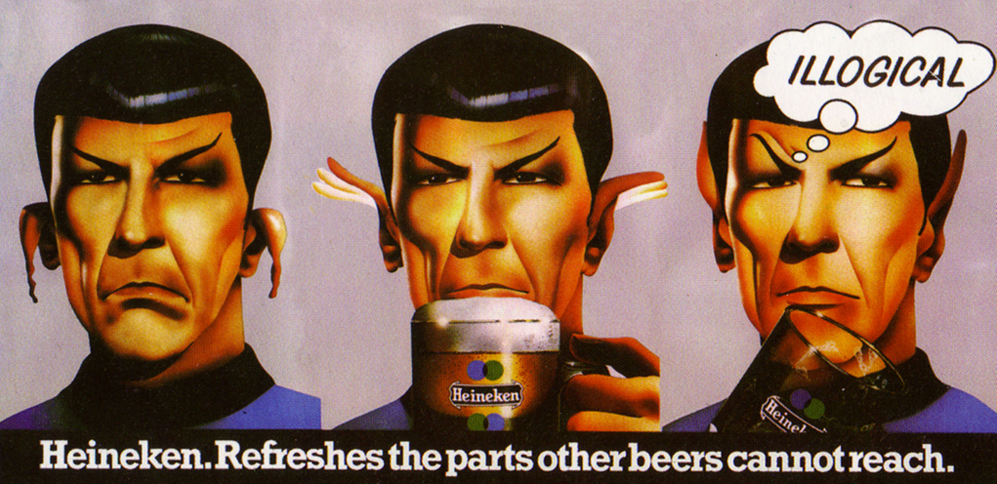
A fourteen week BBC created "series four" began in September 1971. Then on 05 November 1971 there was a treat for Star Trek fans. An episode of Ask Aspel, a children's programme where viewers could write in and ask to see clips of programmes, featured Leonard Nimoy as a guest. Presumably Leonard Nimoy was in London at the time; although this wasn't the time mentioned in his book I Am Spock when he saw the infamous Heineken poster with the drooping ears that was 1975.
Appropriately the final first run Star Trek episode shown on BBC1 was Turnabout Intruder. This was followed by the beginning of several more months of repeats which would last well into 1972.
In the listings below repeats are marked with a number in brackets after the episode title. The number indicates how often the episode has been broadcast by the BBC, all the repeats below are on their second showing.
1971-01-06 19.20 All Our Yesterdays
1971-01-13 19.20 Day of the Dove
1971-01-20 19.20 The Way To Eden
1971-01-27 19.20 Let That Be Your Last Battlefield
1971-02-03 19.20 Wink of an Eye
1971-02-10 19.20 The Cloud Minders
1971-02-17 19.20 Where No Man Has Gone Before (2)
1971-02-24 19.20 A Taste Of Armageddon (2)
1971-03-03 19.20 Mudd's Women (2)
1971-03-10 19.20 Tomorrow Is Yesterday (2)
1971-03-17 19.10 The Devil In The Dark (2)
1971-03-24 19.10 Shore Leave (2)
1971-03-31 19.10 Space Seed (2)
1971-04-07 19.10 The Corbomite Maneuver (2)
1971-04-14 19.10 The Squire Of Gothos (2)
1971-09-15 19.25 Spectre of the Gun
1971-09-22 19.25 Elaan of Troyius
1971-09-29 19.25 The Enterprise Incident
1971-10-06 19.25 And the Children Shall Lead
1971-10-13 19.25 Spock's Brain
1971-10-20 19.25 Is There in Truth No Beauty?
1971-10-27 19.25 For the World is Hollow and I Have Touched the Sky
1971-11-03 19.25 That Which Survives
1971-11-10 19.25 The Mark of Gideon
1971-11-17 19.25 The Lights of Zetar
1971-11-24 19.25 The Savage Curtain
1971-12-01 19.25 The Tholian Web
1971-12-08 19.25 The Alternative Factor
1971-12-15 19.25 Turnabout Intruder
1971-12-22 19.25 What Are Little Girls Made Of? (2)
1971-12-29 19.25 This Side Of Paradise (2)
Click here for part two: 1970
The BBC's made up "series three" continued until 10 February 1971 and was followed by nine weeks of repeats beginning with Where No Man Has Gone Before.
When the BBC started broadcasting Star Trek in 1969 it showed the episodes in a random sequence which by 1971 had somehow become the BBC's preferred order. The 1971 repeats keep the 1969 order, presumably the person in charge of the repeats simply consulted the old schedules, although some episodes are skipped.
| 1969 | 1971 | |
|---|---|---|
| Where No Man Has Gone Before | Repeated | |
| The Naked Time | Skipped | |
| The City On The Edge Of Forever | Skipped | |
| A Taste Of Armageddon | Repeated | |
| Mudd's Women | Repeated | |
| Tomorrow Is Yesterday | Repeated | |
| The Menagerie Part 1 | Skipped | |
| The Menagerie Part 2 | Skipped | |
| The Devil In The Dark | Repeated | |
| Charlie X | Skipped | |
| Shore Leave | Repeated | |
| Space Seed | Repeated | |
| The Man Trap | Skipped | |
| Dagger Of The Mind | Skipped | |
| The Corbomite Manoeuvre | Repeated | |
| Balance Of Terror | Skipped | |
| The Squire Of Gothos | Repeated | |
| What Are Little Girls Made Of? | Repeated | |
| Arena | Skipped | |
| The Return Of The Archons | Skipped | |
| This Side Of Paradise | Repeated |
Why were some episodes missed out? My best guess is that in the wake of the problems with Miri the BBC was reassessing the suitability of all Star Trek episodes. The BBC described Miri, The Empath, Plato's Stepchildren and Whom Gods Destroy as dealing "most unpleasantly with the already unpleasant subjects of madness,torture, sadism and disease." It's easy to find matching elements in the skipped episodes; the space madness in The Naked Time; McCoy's cordrazine induced psychosis in The City On The Edge Of Forever; Pike's disease, and his torture in the clips from The Cage, in The Menagerie; more madness and torture in Dagger Of The Mind; Charlie's sadistic treatment of the crew in Charlie X. Only The Man Trap and Balance Of Terror don't have any obviously unsuitable elements, possibly the BBC just thought they were too intense. When the repeats resume in December 1971 there is a similar pattern. What Are Little Girls Made Of? and This Side Of Paradise are repeated in the 1969 order while two episodes are missed out Arena (possibly too intense) and The Return Of The Archons (madness and sadism during the festival).
In April the BBC shrewdly replaced Star Trek with Mission: Impossible episodes featuring Leonard Nimoy as master of disguise Paris. The Mission: Impossible episodes are a random selection from season four and five in no particular order. Apparently there was nothing unusual in the BBC's treatment of Star Trek, it was simply how all imported series were scheduled.
A fourteen week BBC created "series four" began in September 1971. Then on 05 November 1971 there was a treat for Star Trek fans. An episode of Ask Aspel, a children's programme where viewers could write in and ask to see clips of programmes, featured Leonard Nimoy as a guest. Presumably Leonard Nimoy was in London at the time; although this wasn't the time mentioned in his book I Am Spock when he saw the infamous Heineken poster with the drooping ears that was 1975.
Appropriately the final first run Star Trek episode shown on BBC1 was Turnabout Intruder. This was followed by the beginning of several more months of repeats which would last well into 1972.
In the listings below repeats are marked with a number in brackets after the episode title. The number indicates how often the episode has been broadcast by the BBC, all the repeats below are on their second showing.
1971-01-06 19.20 All Our Yesterdays
1971-01-13 19.20 Day of the Dove
1971-01-20 19.20 The Way To Eden
1971-01-27 19.20 Let That Be Your Last Battlefield
1971-02-03 19.20 Wink of an Eye
1971-02-10 19.20 The Cloud Minders
1971-02-17 19.20 Where No Man Has Gone Before (2)
1971-02-24 19.20 A Taste Of Armageddon (2)
1971-03-03 19.20 Mudd's Women (2)
1971-03-10 19.20 Tomorrow Is Yesterday (2)
1971-03-17 19.10 The Devil In The Dark (2)
1971-03-24 19.10 Shore Leave (2)
1971-03-31 19.10 Space Seed (2)
1971-04-07 19.10 The Corbomite Maneuver (2)
1971-04-14 19.10 The Squire Of Gothos (2)
1971-09-15 19.25 Spectre of the Gun
1971-09-22 19.25 Elaan of Troyius
1971-09-29 19.25 The Enterprise Incident
1971-10-06 19.25 And the Children Shall Lead
1971-10-13 19.25 Spock's Brain
1971-10-20 19.25 Is There in Truth No Beauty?
1971-10-27 19.25 For the World is Hollow and I Have Touched the Sky
1971-11-03 19.25 That Which Survives
1971-11-10 19.25 The Mark of Gideon
1971-11-17 19.25 The Lights of Zetar
1971-11-24 19.25 The Savage Curtain
1971-12-01 19.25 The Tholian Web
1971-12-08 19.25 The Alternative Factor
1971-12-15 19.25 Turnabout Intruder
1971-12-22 19.25 What Are Little Girls Made Of? (2)
1971-12-29 19.25 This Side Of Paradise (2)
Notes:
1) 1971-01-06, Memory Alpha has The Paradise Syndrome transmitted here. However television listings in The Daily Mirror name All Our Yesterdays as do print editions of the Radio Times. Frustratingly BBC Genome has no records between 2 January 1971 and 9 January 1971, but the entry for 6 January 1970 currently shows a 10 minute version of All Our Yesterdays starting at 7.20pm between a Tom and Jerry cartoon and Harry Worth. The start time, day, and month are correct presumably BBC Genome has somehow assigned the wrong year and will be corrected at some point.
2) 1971-12-08, surprisingly this doesn't seem to be a repeat for The Alternative Factor. Memory Alpha suggests this episode aired on 6 December 1969 but the Radio Times is adamant the episode didn't get shown until 8 December 1971. On the face of it the Radio Times listing must be wrong. The 1971 date is way after any other first season stories were broadcast. If correct it would mean some first season stories received a BBC repeat before the première of The Alternative Factor. Astonishingly it looks as if the Radio Times is correct. When The Alternative Factor was shown in 1971 it was sandwiched between The Tholian Web and Turnabout Intruder. This also happened when it was repeated in 1973, and in 1976; and again in 1981. It does look like the BBC sat on the episode until 1971 and it ended up being the penultimate first-run BBC story. Why they sat on the episode for so long is another question.
2) 1971-12-08, surprisingly this doesn't seem to be a repeat for The Alternative Factor. Memory Alpha suggests this episode aired on 6 December 1969 but the Radio Times is adamant the episode didn't get shown until 8 December 1971. On the face of it the Radio Times listing must be wrong. The 1971 date is way after any other first season stories were broadcast. If correct it would mean some first season stories received a BBC repeat before the première of The Alternative Factor. Astonishingly it looks as if the Radio Times is correct. When The Alternative Factor was shown in 1971 it was sandwiched between The Tholian Web and Turnabout Intruder. This also happened when it was repeated in 1973, and in 1976; and again in 1981. It does look like the BBC sat on the episode until 1971 and it ended up being the penultimate first-run BBC story. Why they sat on the episode for so long is another question.
Sunday, October 26, 2014
Star Trek on the BBC: 1970
Star Trek
returned to BBC1 on 6 April 1970, one week after the Easter Bank
Holiday Monday, and ran weekly until 24 August. In an odd scheduling
move the series then took a one week break for the August Bank
Holiday on 31 August, returned for one more episode on 7 September,
and then took another four week break before returning again on 7
October.
The block of episodes from 6 April to 7 September appears to have been promoted as "series two" of Star Trek. The 1969 "series one" of 25 episodes had slotted neatly between series six and seven of Doctor Who but now the two programmes would run concurrently. Doctor Who was back on Saturdays at 5.20pm and Star Trek was scheduled for 7.10pm on Monday. The later start time might be due to Star Trek drawing a more adult audience than expected, or it might be because the stories were a little more intense than appropriate for the original 5.15pm start time, or it could just be that the series was a ratings success and the BBC wanted to bring Star Trek back as soon as possible and the 50 minute Monday evening slot vacated by The Andy Williams show was ideal.
The episodes shown were a random selection of season one and two stories. It's possible these were originally intended to fill an uninterrupted 22 week block ending on the Bank Holiday Monday. "Series three" would then begin in October 1970 following the September break. The slightly disjointed end to "series two" came about because the August Bank Holiday Monday evening slot was given over to a live rock climbing event from Wales; The Anglesey Climb The Spider's Web. These live outside broadcasts from around Great Britain were an occasional feature in the late 60s and early 70s. The most famous was the 1967 three day climb of The Old Man of Hoy, and there would be another in 1971 The Glencoe Climb. These live outside broadcasts seem to have been the inspiration for the Monty Python's Flying Circus sketch Climbing the North Face of the Uxbridge Road.
In 1969 the successful Apollo 11 Moon landing had taken place between the first two episodes of Star Trek shown on BBC1. In an unfortunate echo of this the real life drama of Apollo 13 began on 14 April 1970 the day after The Enemy Within premièred.
Towards the end of "series two" the Radio Times interviewed Gene Roddenberry. The interview was published in the 25 June 1970 edition and was accompanied by this fantastic piece of Frank Bellamy art.

A "series three" of 16 episodes began on Wednesday 7 October 1970 and would continue until February 1971. The Ultimate Computer began this run and its broadcast was accompanied by a slightly confused Daily Mirror article which mixed up the BBC's invented "series three" with the actual last season three of Star Trek. In fact because of the way the BBC had divided up the stories they would be able to present a 14 episode "series four" in 1971. By the end of 1970 the BBC had showed all the episodes of season one and two, as well as a few from season three.
The block of episodes from 6 April to 7 September appears to have been promoted as "series two" of Star Trek. The 1969 "series one" of 25 episodes had slotted neatly between series six and seven of Doctor Who but now the two programmes would run concurrently. Doctor Who was back on Saturdays at 5.20pm and Star Trek was scheduled for 7.10pm on Monday. The later start time might be due to Star Trek drawing a more adult audience than expected, or it might be because the stories were a little more intense than appropriate for the original 5.15pm start time, or it could just be that the series was a ratings success and the BBC wanted to bring Star Trek back as soon as possible and the 50 minute Monday evening slot vacated by The Andy Williams show was ideal.
The episodes shown were a random selection of season one and two stories. It's possible these were originally intended to fill an uninterrupted 22 week block ending on the Bank Holiday Monday. "Series three" would then begin in October 1970 following the September break. The slightly disjointed end to "series two" came about because the August Bank Holiday Monday evening slot was given over to a live rock climbing event from Wales; The Anglesey Climb The Spider's Web. These live outside broadcasts from around Great Britain were an occasional feature in the late 60s and early 70s. The most famous was the 1967 three day climb of The Old Man of Hoy, and there would be another in 1971 The Glencoe Climb. These live outside broadcasts seem to have been the inspiration for the Monty Python's Flying Circus sketch Climbing the North Face of the Uxbridge Road.
In 1969 the successful Apollo 11 Moon landing had taken place between the first two episodes of Star Trek shown on BBC1. In an unfortunate echo of this the real life drama of Apollo 13 began on 14 April 1970 the day after The Enemy Within premièred.
Towards the end of "series two" the Radio Times interviewed Gene Roddenberry. The interview was published in the 25 June 1970 edition and was accompanied by this fantastic piece of Frank Bellamy art.
A "series three" of 16 episodes began on Wednesday 7 October 1970 and would continue until February 1971. The Ultimate Computer began this run and its broadcast was accompanied by a slightly confused Daily Mirror article which mixed up the BBC's invented "series three" with the actual last season three of Star Trek. In fact because of the way the BBC had divided up the stories they would be able to present a 14 episode "series four" in 1971. By the end of 1970 the BBC had showed all the episodes of season one and two, as well as a few from season three.
 |
| The Daily Mirror 7/10/1970
"Series three"
was transmitted at 7.20pm. The start time had crept a little further
forwards into the evening but it wasn't enough to head off some
controversy when Miri was
shown on 2 December 1970. Several viewers complained about the themes
of the episode. The complaints have never been made public but the
BBC took them seriously enough to review all unbroadcast episodes of
Star Trek. Three more
episodes were pulled; The Empath,
Whom Gods Destroy, and
Plato's Stepchildren.
This must have been done at very short notice as The Empath
was due to be shown on 16
December, two weeks after Miri, and
remains on the BBC Genome site and in newspaper listings as being
broadcast at 7.20pm. The BBC's institutional memory seems to have
labelled all four episodes as utterly unsuitable for broadcast. As
late as 1984 enquires to the BBC were being answered with the BBC
line that, "we feel that [the episodes] all deal most unpleasantly with the already unpleasant subjects of madness,torture, sadism and disease. You will appreciate that account must betaken that out of Star Trek's large and enthusiastic following, many are juveniles who would watch the programme no matter what time of day the series is put into the programme schedules." These four
episodes went unseen until 1993 when BBC2 began a full repeat season
of Star Trek to fill
the gap between their broadcast of season three and four of Star
Trek: The Next Generation.
|
Date Time Episode
1970-04-06: 19.10: Court Martial
1970-04-13: 19.10: The Enemy Within
1970-04-20: 19.10: Catspaw
1970-04-27: 19.10: Who Mourns for Adonais?
1970-05-04: 19.10: The Apple
1970-05-11: 19.10: Metamorphosis
1970-05-18: 19.10: Wolf In The Fold
1970-05-25: 18.15: The Changeling
1970-06-01: 19.10: The Trouble with Tribbles
1970-06-08: 19.10: Bread And Circuses
1970-06-15: 19.10: Mirror, Mirror scheduled but dropped for a World Cup repeat
1970-06-22: 19.10: Journey To Babel
1970-06-29: 19.10: The Deadly Years
1970-07-06: 19.10: A Private Little War
1970-07-13: 19.10: Obsession
1970-07-20: 19.10: By Any Other Name
1970-07-27: 19.10: I, Mudd
1970-08-03: 19.10: Patterns Of Force
1970-08-10: 19.10: The Immunity Syndrome
1970-08-17: 19.10: Return To Tomorrow
1970-08-24: 19.10: The Omega Glory
1970-09-07: 19.10: A Piece of the Action
1970-10-07: 19.20: The Ultimate Computer
1970-10-14: 19.20: Friday's Child
1970-11-04: 19.20: Assignment: Earth
1970-11-11: 19.20: Mirror, Mirror
1970-11-18: 19.20: The Gamesters of Triskelion
1970-11-25: 19.20: Amok Time
1970-12-02: 19.20: Miri
1970-12-09: 19.20: Operation -- Annihilate!
1970-12-16: 19.20: The Empath not shown, replaced by The Paradise Syndrome
1970-12-30: 19.20: Requiem for Methuselah
Notes
1) 1970-04-06. Court
Martial was scheduled for broadcast on 1969-12-06 according to
the BBC Genome site and The Daily Mirror, while Memory Alpha
suggests The Alternative Factor. BBC Genome also lists Court
Martial as starting the 1970 run of Star Trek. As
do the Daily Mirror and the Daily Express. A repeat within the space of five months seems unlikely. The Daily Mirror listing
specifically describes the 1970 broadcast as the start of a new
series, as does the BBC Genome listing referring to "the new
adventures of the Star Ship Enterprise." I think we can take
this as confirmation that Court Martial
was originally scheduled to be shown on 6 December 1969 but held
back. A story in which Kirk must fight to keep control of the
Enterprise might have been seen as a better hook to begin "series
two."
2) 1970-05-25, a Whitsun Bank Holiday showing of Disney Time pushed The Changeling into the earlier 6.15pm slot.
2) 1970-05-25, a Whitsun Bank Holiday showing of Disney Time pushed The Changeling into the earlier 6.15pm slot.
 |
| The Radio Times 16 July 1970 |
4) In the second half of 1970 several one off specials interrupt "series three" of Star
Trek.
1970-10-21 (19.20) Blackpool Tower Circus: An excerpt from the 1970 Show with The Svensons in their classical riding fantasy presenting a colourful Troika. Freddie Kenton and his beautiful partner, PETRONELLA, from Holland, in sophisticated juggling. David Rosaire with his family of perky pekes. Gerard Edon grace and electrifying thrills on the swinging trapeze. The Elwardos four young Danes hand-balancing on a staircase. Ruppert's Bears returning to Blackpool after a long engagement in Las Vegas. Charlie Cairoli with his son CHARLIE JUNIOR , his partner PAUL and the long suffering LITTLE JIMMY in trouble again - with the Circus plumbing. The Skating Sandras in the glittering water finale with The Tower Circusettes.
1970-10-28 (19.20) Remember, Remember... : Millions get innocent pleasure and amusement from firework displays, but we are still one of the few countries left that sells fireworks to children. The law says that they must be over 13 before they can buy - but those badly burned are frequently much younger. Every year fireworks are an annual hazard which injure and scar thousands of children.
Two years ago the Man Alive team reported on the cost, in human suffering, of Guy Fawkes night. Last year, when the programme was shown on BBC1, it caused an outcry. A National Campaign to Prevent Fireworks was formed. Others cried ' kill-joy ' - but 1,000 fewer children were injured. Moves were made in Parliament to change the law. But still nothing has been done. Tonight a programme introduced by DESMOND WILCOX examines the question afresh, investigates the need for safety, questions the law as it stands today, and asks-is the situation good enough?
1970-12-23 (18.35) Jesus: The story of His life through the eyes of the young generation Introduced by Kenneth More and featuring The Young Generation.
(19.20) Ace of Clubs: The Grand Final . Michael Aspel introduces a Gala Performance featuring artists competing in the Final of the 1970 Stage Awards from the City Varieties Theatre, Leeds. Of the 10 artists taking part, five will receive Golden Jesters, and the most outstanding act will be presented with the Bernard Delfont Special Award.
1970-10-21 (19.20) Blackpool Tower Circus: An excerpt from the 1970 Show with The Svensons in their classical riding fantasy presenting a colourful Troika. Freddie Kenton and his beautiful partner, PETRONELLA, from Holland, in sophisticated juggling. David Rosaire with his family of perky pekes. Gerard Edon grace and electrifying thrills on the swinging trapeze. The Elwardos four young Danes hand-balancing on a staircase. Ruppert's Bears returning to Blackpool after a long engagement in Las Vegas. Charlie Cairoli with his son CHARLIE JUNIOR , his partner PAUL and the long suffering LITTLE JIMMY in trouble again - with the Circus plumbing. The Skating Sandras in the glittering water finale with The Tower Circusettes.
1970-10-28 (19.20) Remember, Remember... : Millions get innocent pleasure and amusement from firework displays, but we are still one of the few countries left that sells fireworks to children. The law says that they must be over 13 before they can buy - but those badly burned are frequently much younger. Every year fireworks are an annual hazard which injure and scar thousands of children.
Two years ago the Man Alive team reported on the cost, in human suffering, of Guy Fawkes night. Last year, when the programme was shown on BBC1, it caused an outcry. A National Campaign to Prevent Fireworks was formed. Others cried ' kill-joy ' - but 1,000 fewer children were injured. Moves were made in Parliament to change the law. But still nothing has been done. Tonight a programme introduced by DESMOND WILCOX examines the question afresh, investigates the need for safety, questions the law as it stands today, and asks-is the situation good enough?
1970-12-23 (18.35) Jesus: The story of His life through the eyes of the young generation Introduced by Kenneth More and featuring The Young Generation.
(19.20) Ace of Clubs: The Grand Final . Michael Aspel introduces a Gala Performance featuring artists competing in the Final of the 1970 Stage Awards from the City Varieties Theatre, Leeds. Of the 10 artists taking part, five will receive Golden Jesters, and the most outstanding act will be presented with the Bernard Delfont Special Award.
5) 1970-12-16. What replaced The Empath? The Paradise Syndrome like The Doomsday Machine has no first-run date listed on BBC Genome. The first repeat takes place in 1973 scheduled between Operation -- Annihilate! and Requiem For Methuselah, a pattern also repeated in 1975. In 1980 something odd happens. The schedule goes I, Mudd, The Paradise Syndrome, then Requiem For Methuselah but as The Paradise Syndrome and Requiem For Methuselah are repeated back to back I think the point still holds. The Paradise Syndrome must have premièred the week before Requiem For Methuselah which makes it 16 December 1970; the date planned for The Empath before that story was cancelled in the wake of complaints about Miri.
Saturday, October 25, 2014
Star Trek on the BBC: 1969
This is the first of
what will probably be several long updates about Star Trek
episodes and their repeats on the BBC. The recently launched BBC Genome project makes it easy to search BBC schedules and it is now
possible to do from a computer what would otherwise have taken months
in a library to complete.
Star Trek
was first used to fill the six month gap between series six and seven
of Doctor Who. Patrick
Troughton spun off into space at the end of The War Games
on 21st June 1969 and two weeks
later, after a break for Wimbledon, on 12 July 1969 Where
No Man Has Gone Before started
an unbroken 25 week run which ended on 27 December 1969.
Use the player below to listen to the 1969 trailer for Star Trek which aired on BBC1 as The War Games ended.
Use the player below to listen to the 1969 trailer for Star Trek which aired on BBC1 as The War Games ended.
From
the BBC's perspective Star Trek
must have looked like an obvious replacement for Doctor
Who. Both series were given the
same start time of 5.15pm so there seems to have been an expectation
that they would draw the same audience. Star Trek's
optimistic view of humanity's future in space also chimed perfectly
with real life events. Apollo 11 lifted off for the Moon on
Wednesday 16th July, between the broadcast of Where No Man
Has Gone Before and The
Naked Time. In fact Apollo 11
passed behind the Moon and entered lunar orbit at around 6.20pm, just
after The Naked Time
finished at 6.05pm on Saturday 19 July. In addition to this real life
outer space action, BBC1 was preparing for the launch of colour
television on 15 November 1969; Arena,
shown the same day, was the first episode broadcast in living colour.
Don't try to make sense of the order. Things start sensibly with Where No Man Has Gone Before, and following that with the character based The Naked Time makes some sense, but the BBC appears to be pulling episodes off the shelf at random. If you've ever argued with another fan about whether production order or NBC's broadcast order is the correct way to watch Star Trek then the BBC's schedule might reduce you to tears. In addition the observant among you will notice that the 25 week run is not long enough for Star Trek's first season. Five episodes have not yet been shown; The Enemy Within, Miri, Court Martial, The Alternative Factor, and Operation--Annihilate!
Don't try to make sense of the order. Things start sensibly with Where No Man Has Gone Before, and following that with the character based The Naked Time makes some sense, but the BBC appears to be pulling episodes off the shelf at random. If you've ever argued with another fan about whether production order or NBC's broadcast order is the correct way to watch Star Trek then the BBC's schedule might reduce you to tears. In addition the observant among you will notice that the 25 week run is not long enough for Star Trek's first season. Five episodes have not yet been shown; The Enemy Within, Miri, Court Martial, The Alternative Factor, and Operation--Annihilate!
One
small note before we get to the lists. Dates have been written
backwards for ease of sorting so 1969-07-12 is 12 July 1969. Life may
not be too short for me to go through the BBC Genome listings for 79
individual Star Trek
episodes, but it turns out it is too short for me to go back and
subsequently rewrite the dates into a more readable format.
1969-07-12: Where No Man Has Gone Before
1969-07-19: The Naked Time
1969-07-26: The City On The Edge Of Forever
1969-08-02: A Taste Of Armageddon
1969-08-09: Mudd's Women
1969-08-16: Tomorrow Is Yesterday
1969-08-23: The Menagerie Part 1
1969-08-30: The Menagerie Part 2
1969-09-06: The Devil In The Dark
1969-09-13: Charlie X
1969-09-20: Shore Leave
1969-09-27: Space Seed
1969-10-04: The Man Trap
1969-10-11: Dagger Of The Mind
1969-10-18: The Corbomite Manoeuvre
1969-10-25: Balance Of Terror
1969-11-01: The Squire Of Gothos
1969-11-08: What Are Little Girls Made Of?
1969-11-15: Arena
1969-11-22: The Return Of The Archons
1969-11-29: This Side Of Paradise
1969-12-06: The Doomsday Machine
1969-12-13: Errand Of Mercy
1969-12-20: The Conscience Of The King
1969-12-27: The Galileo Seven
Notes
1) 1969-10-18: The Corbomite Maneuver. Memory Alpha lists this as being first broadcast on 16th December 1970. BBC Genome offers 18 October 1969, and both the Daily Mirror and the Daily Express agree; although the Daily Express does go a bit mad again by suggesting that this is a colour broadcast on what was then only a black and white channel (maybe they were trying to point out it was made in colour). In this case BBC Genome is almost certainly correct,
although there are good reasons for thinking The Corbomite Maneuver was given an unscheduled repeat in December 1970 (again, something I'll get to in the next update). EDIT: 26/10/14: sorry, that was utterly wrong. The Corbomite Maneuver was almost certainly not repeated in December 1970.
2)1969-12-06: Memory Alpha lists The Alternative Factor as being broadcast on this date while the BBC Genome site opts for Court Martial. Going to newspaper listings for the day we find the Daily Mirror agrees with BBC Genome while the Daily Express opts for The Doomsday Machine. It may look like the Daily Express is randomly pulling episode titles from a hat but they actually appear to be the only newspaper with correct television listings. 1972 is the year The Doomsday Machine first appears in the Radio Times as repeat sandwiched between This Side Of Paradise and Errand Of Mercy. This also happens in 1974 and 1979. I'll keep banging on about the BBC's original transmission order because it is used as the template for subsequent repeats. At least until around 1984 which seems to be the first time the BBC repeated Star Trek in the original NBC order. Working backwards The Doomsday Machine must have premièred on BBC1 between the first-run dates for This Side Of Paradise and Errand Of Mercy; which is 6 December 1969. To find out what was actually broadcast on this date would require access to what the BBC called PasB (Programme as Broadcast) documentation, and that is locked away in the BBC's Written Archives at Caversham. I'm confident that The Doomsday Machine was shown 6 December 1969 but without access to the PasBs we may never know for sure.
1969-07-12: Where No Man Has Gone Before
1969-07-19: The Naked Time
1969-07-26: The City On The Edge Of Forever
1969-08-02: A Taste Of Armageddon
1969-08-09: Mudd's Women
1969-08-16: Tomorrow Is Yesterday
1969-08-23: The Menagerie Part 1
1969-08-30: The Menagerie Part 2
1969-09-06: The Devil In The Dark
1969-09-13: Charlie X
1969-09-20: Shore Leave
1969-09-27: Space Seed
1969-10-04: The Man Trap
1969-10-11: Dagger Of The Mind
1969-10-18: The Corbomite Manoeuvre
1969-10-25: Balance Of Terror
1969-11-01: The Squire Of Gothos
1969-11-08: What Are Little Girls Made Of?
1969-11-15: Arena
1969-11-22: The Return Of The Archons
1969-11-29: This Side Of Paradise
1969-12-06: The Doomsday Machine
1969-12-13: Errand Of Mercy
1969-12-20: The Conscience Of The King
1969-12-27: The Galileo Seven
Notes
1) 1969-10-18: The Corbomite Maneuver. Memory Alpha lists this as being first broadcast on 16th December 1970. BBC Genome offers 18 October 1969, and both the Daily Mirror and the Daily Express agree; although the Daily Express does go a bit mad again by suggesting that this is a colour broadcast on what was then only a black and white channel (maybe they were trying to point out it was made in colour). In this case BBC Genome is almost certainly correct,
2)1969-12-06: Memory Alpha lists The Alternative Factor as being broadcast on this date while the BBC Genome site opts for Court Martial. Going to newspaper listings for the day we find the Daily Mirror agrees with BBC Genome while the Daily Express opts for The Doomsday Machine. It may look like the Daily Express is randomly pulling episode titles from a hat but they actually appear to be the only newspaper with correct television listings. 1972 is the year The Doomsday Machine first appears in the Radio Times as repeat sandwiched between This Side Of Paradise and Errand Of Mercy. This also happens in 1974 and 1979. I'll keep banging on about the BBC's original transmission order because it is used as the template for subsequent repeats. At least until around 1984 which seems to be the first time the BBC repeated Star Trek in the original NBC order. Working backwards The Doomsday Machine must have premièred on BBC1 between the first-run dates for This Side Of Paradise and Errand Of Mercy; which is 6 December 1969. To find out what was actually broadcast on this date would require access to what the BBC called PasB (Programme as Broadcast) documentation, and that is locked away in the BBC's Written Archives at Caversham. I'm confident that The Doomsday Machine was shown 6 December 1969 but without access to the PasBs we may never know for sure.
 |
| The Daily Express 6 December 1969 |
Sunday, March 3, 2013

![we feel that [the episodes] all deal most unpleasantly with the already unpleasant subjects of madness,torture, sadism and disease. You will appreciate that account must betaken that out of Star Trek's large and enthusiastic following, many are juveniles who would watch the programme no matter what time of day the series is put into the programme schedules."](http://fanlore.org/wiki/File:Voyager5inside4.jpg)

Subscribe to:
Posts (Atom)